
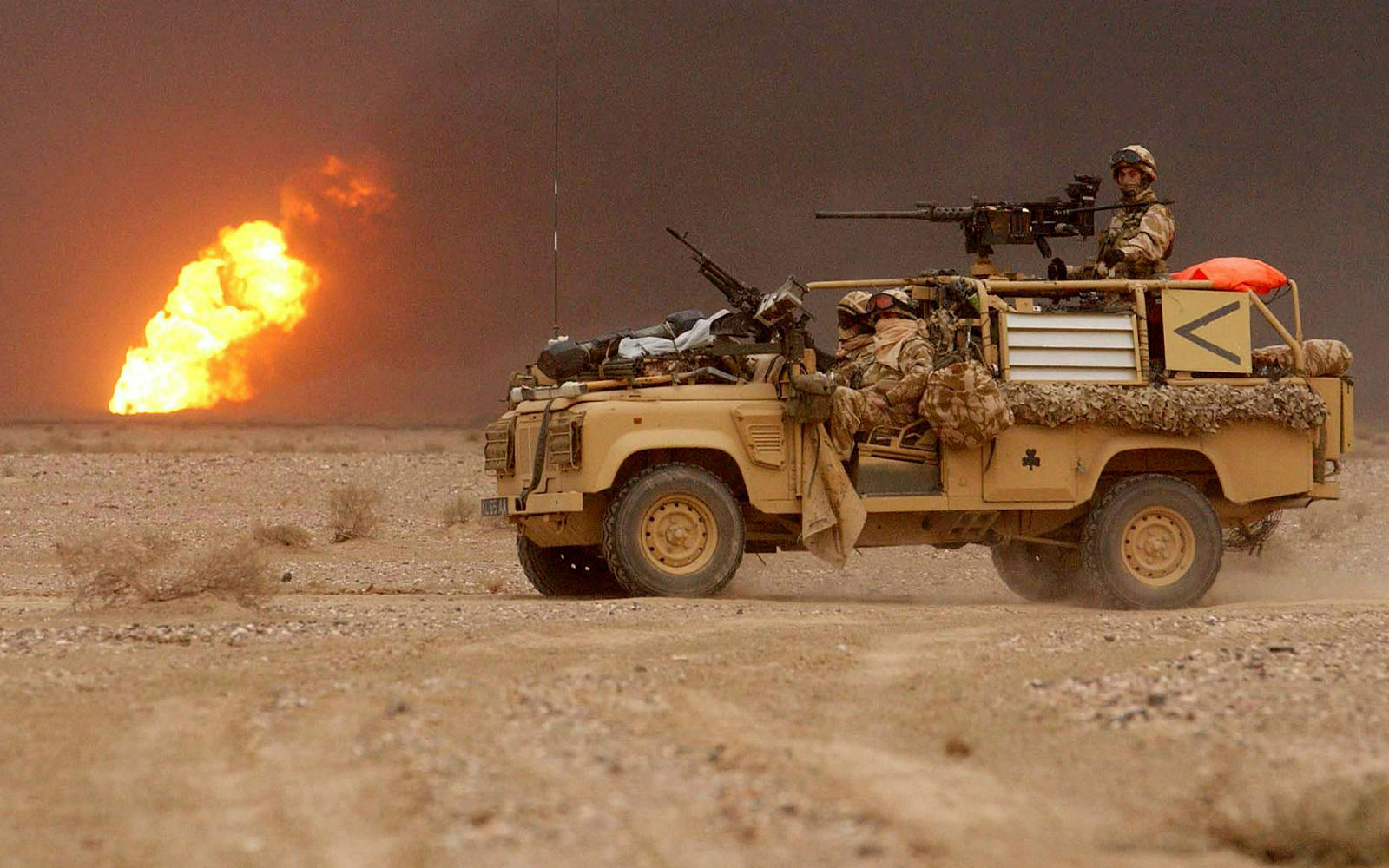
As a young soldier who arrived at my regiment at the back end of the Telic campaign, I was not afforded the opportunity to serve in Iraq, as the battalion I served with, 1 Royal Irish, had shifted their focus to Op Herrick. But one of the most memorable things about being a sprog in an infantry battalion is the anecdotes shared with you by your comrades who were “Long in the tooth”. Some left me with envy that I was too young to be there, others not so much, occasionally feeling like more of a lucky escape and relief that I am only seventeen and unable to deploy. But equally fascinated by these emblematic moments of the battalion’s recent history.
The key stories that would often be shared with me and my fellow fresh-faced and slightly spotty rangers were… The recent kinetic fury they experienced on Herrick 8 just the year previous, Operation Barras in Sierra Leone where six soldiers from the battalion were kidnapped by the West Side Boys, which triggered a covert and robust rescue operation by the SAS, SBS and 1 Para, the punishing experience of Op Banner in Northern Ireland where many members of the battalion are from and the impact of conducting operations in their home country, some of which found themselves on patrol in their home towns as their families watched on. And finally, the Invasion of Iraq, which launched Op TELIC, including the event that set the profound and candid tone for the reality that was to come…
On the evening of Wednesday, 19th March 2003, Journalist Sarah Oliver finds herself at Fort Blair Mayne in the Kuwaiti desert, reporting for the Mail on Sunday. Heading to an open area of the fort with a notepad and pen in hand, completely unaware that what she was about to write down a speech that would make history, and arguably only made so due to her being able to read the room and understand that there was a moment of significance unfolding, compelling her to transcribe it in shorthand.
Gathering with her are around 800 troops from the 1st battalion of the Royal Irish Regiment who are part of the 16 Air Assault Brigade. They are set in the early hours of the morning to cross the barren land of Kuwait and storm over the border into Iraq in a bid to topple Saddam Hussein's regime, to relieve them of their possession of nuclear weapons and liberate the people of Iraq from draconian rule.
As Sarah, the battalion and its array of attachments forming a key part the Ministry of Defence’s lead battlegroup make the obligatory army’s three sides of a square, leaving space in the middle for the CO, Lieutenant Colonel Tim Collins to step forward to deliver what seemed to be a standard battalion pre-operational brief, but in reality unbeknownst to him, the Commanding Officer of the battalion was about to give a speech that would cement its place in the history books and said to hold a spot on the wall of the Oval Office. Sarah furiously transcribed in freehand the following speech…
"We go to liberate, not to conquer.
We will not fly our flags in their country.
We are entering Iraq to free a people and the only flag which will be flown in that ancient land is their own.
Show respect for them.
There are some who are alive at this moment who will not be alive shortly.
Those who do not wish to go on that journey, we will not send.
As for the others, I expect you to rock their world.
Wipe them out if that is what they choose.
But if you are ferocious in battle remember to be magnanimous in victory.
Iraq is steeped in history.
It is the site of the Garden of Eden, of the Great Flood and the birthplace of Abraham.
Tread lightly there.
You will see things that no man could pay to see - and you will have to go a long way to find a more decent, generous and upright people than the Iraqis.
You will be embarrassed by their hospitality even though they have nothing.
Don't treat them as refugees, for they are in their own country.
Their children will be poor, in years to come, they will know that the light of liberation in their lives was brought by you.
If there are casualties of war then remember that when they woke up and got dressed in the morning they did not plan to die this day.
Allow them dignity in death.
Bury them properly and mark their graves.
It is my foremost intention to bring every single one of you out alive.
But there may be people among us who will not see the end of this campaign.
We will put them in their sleeping bags and send them back.
There will be no time for sorrow.
The enemy should be in no doubt that we are his nemesis and that we are bringing about his rightful destruction.
Many regional commanders have stains on their souls and they are stoking the fires of hell for Saddam.
He and his forces will be destroyed by this coalition for what they have done.
As they die they will know their deeds have brought them to this place. Show them no pity.
It is a big step to take another human life.
It is not to be done lightly.
I know of men who have taken life needlessly in other conflicts.
I can assure you they live with the mark of Cain upon them.
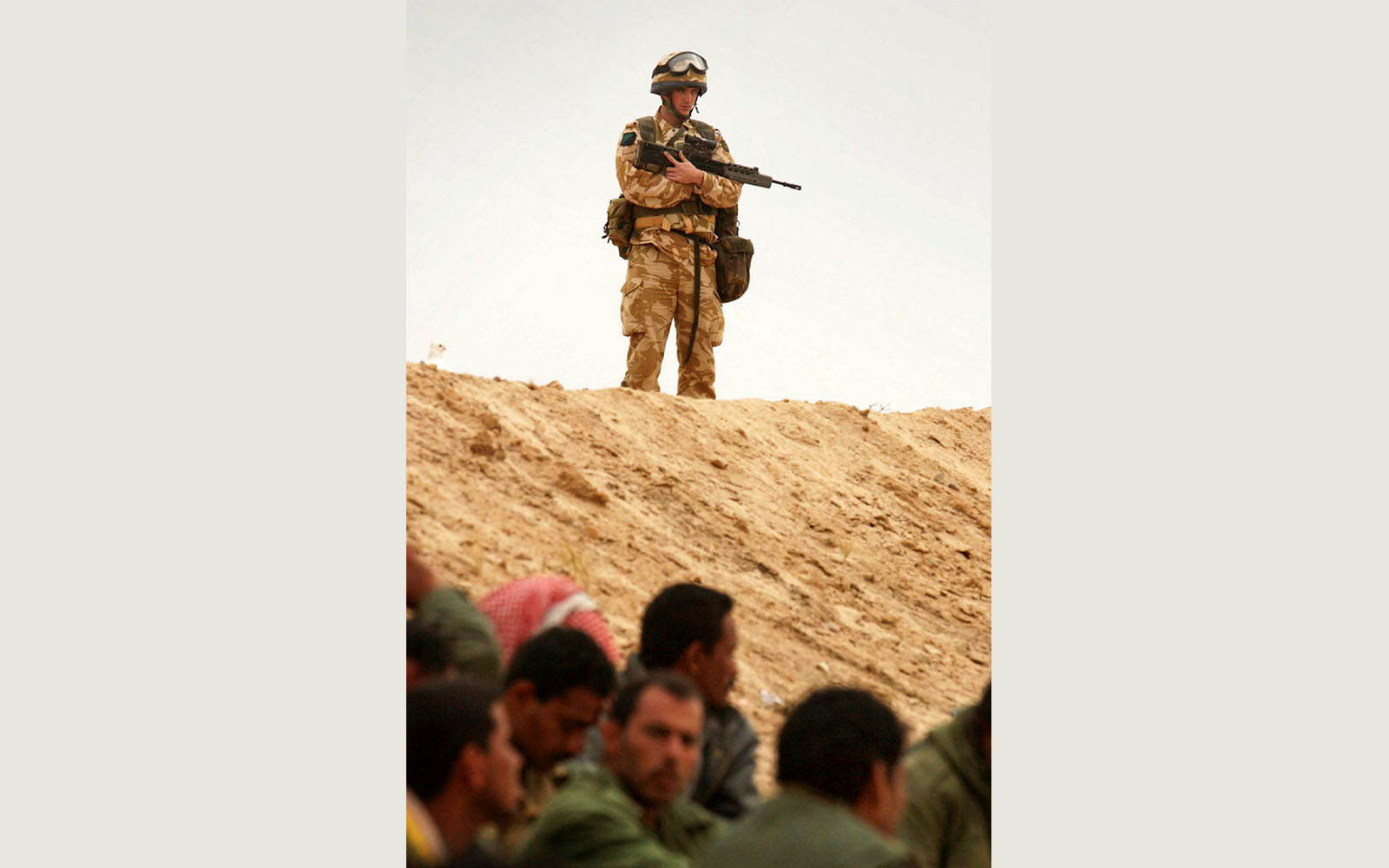
If someone surrenders to you then remember they have that right in international law and ensure that one day they go home to their family.
The ones who wish to fight, well, we aim to please.
If you harm the Regiment or its history by over-enthusiasm in killing or in cowardice, know it is your family who will suffer.
You will be shunned unless your conduct is of the highest -- for your deeds will follow you down through history.
We will bring shame on neither our uniform or our nation."
(On Saddam's chemical and biological weapons)
"It is not a question of if, it's a question of when.
We know he has already devolved the decision to lower commanders, and that means he has already taken the decision himself.
If we survive the first strike we will survive the attack.
As for ourselves, let's bring everyone home and leave Iraq a better place for us having been there.
Our business now is north."
This was the speech that defined a war. It tapped into the brutality soldiers must endure on the battlefield while always conducting themselves with dignity and humanity. It held in high regard the often-overlooked vulnerability of civilians caught up in war and, in this case, trapped under an authoritarian dictatorship. Tim acted as a breakwater, separating the politics that led them there from the raw, often life-changing experiences of a battalion on the frontline.
It reinforced the core values of a soldier and the impact of their decisions, regardless of rank. It was a reminder that the actions taken will be remembered by the Iraqi people as they bear witness to the collapse of a twenty-four-year regime that made them subjects of Saddam’s heinous acts of totalitarianism.
The following day of that seminal speech, 46,000 troops deployed and crossed the border into Iraq; just shy of 10,000 were British. Op TELIC was successful in quashing Saddam’s regime, triggering an end to the brutal treatment of its people, despite weapons of mass destruction never being found.
In the 7 years that followed, 179 British Troops lost their lives. As we reach the milestone of 15 years since the occupation of Iraq ended, it is a significant time to look back and reflect on the sacrifices made by our troops and the lasting imprint they and their comrades made on the people of Iraq.
I will always remember the stories shared with me from Telic veterans and how it affects them still, so many years later, and I will always remember the influence on their storytelling of Tim Collins’ on-the-eve-of-battle speech that they vividly recall.
Karl Lambert
British Army Veteran